Last Updated on May 7, 2026
Today I’m talking about signs of a slow metabolism, because this is one of those topics people usually oversimplify into “I can’t lose weight,” when really, your body is waving red flags long before the scale gets stuck.
If you have signs of a slow metabolism, it’s very common to struggle with weight, energy, mood, cravings, sleep, digestion, stress, and that general “why do I feel like my body is working against me?” or “I don’t feel like myself” feeling. And no, it doesn’t mean you’re broken. It means your body is trying to protect you while asking for support.
Your metabolism isn’t just the thing that helps you gain or lose weight. Your metabolism is connected to energy, hormones, detoxification, digestion, brain function, cells, repair, and survival. Fat loss is secondary to survival, always.
So if your body senses nutrient deficiency, toxicity, chronic stress, inflammation, poor sleep, hormone imbalance, GI issues, or anything else that threatens essential function, it can slow things down… That can make weight loss harder, but it can also make you tired, moody, puffy, foggy, achy, and less resilient.
What Your Metabolism Actually Does
Your metabolism is the total collection of chemical reactions happening inside your body to keep you alive… i.e. functioning, repairing, growing, and adapting. It’s how your body turns food into usable energy, builds and repairs tissue, clears waste, regulates hormones, supports immune function, and keeps your basic systems online. Metabolism is literally every chemical reaction keeping you alive.
This is why a slow metabolism isn’t just a weight problem. It’s a function problem that affects weight, health, and mental health.
When something chemically stressful is happening inside your body, your body has to prioritize. It’s going to choose breathing, brain function, blood sugar stability, organ protection, and survival over fat loss. Every time.
Fat storage and fat loss are survival mechanisms. Your body stores fat because fat is useful. It’s stored fuel. It cushions organs. It can help buffer toxins. It gives your body something to draw from if food and nutrients aren’t consistently available.
So if you have stubborn weight that doesn’t mean you’re doomed to hold on to weight forever. It means you have to stop fighting your body with starvation diets, random supplements, and punishment workouts, and start asking a better question:
What is making my body feel unsafe enough to slow down?
If your body is struggling to carry out natural metabolic functions you’ll have symptoms. If you already have symptoms (physical or mental health) there’s a good chance your metabolism is slow.
Let’s confirm by going over the top signs of a slow metabolism…
Signs of a Slow Metabolism
Signs of a slow metabolism can show up in your weight, yes, but they can also show up in your energy, mood, digestion, skin, hair, sleep, cravings, inflammation, and recovery.
And just so we’re clear, this doesn’t mean one random symptom automatically means your metabolism is broken. It means your body may be giving you clues that some function(s) deeper are off chemically, nutritionally, hormonally, or stress-wise.
Here are the top signs of a slow metabolism…
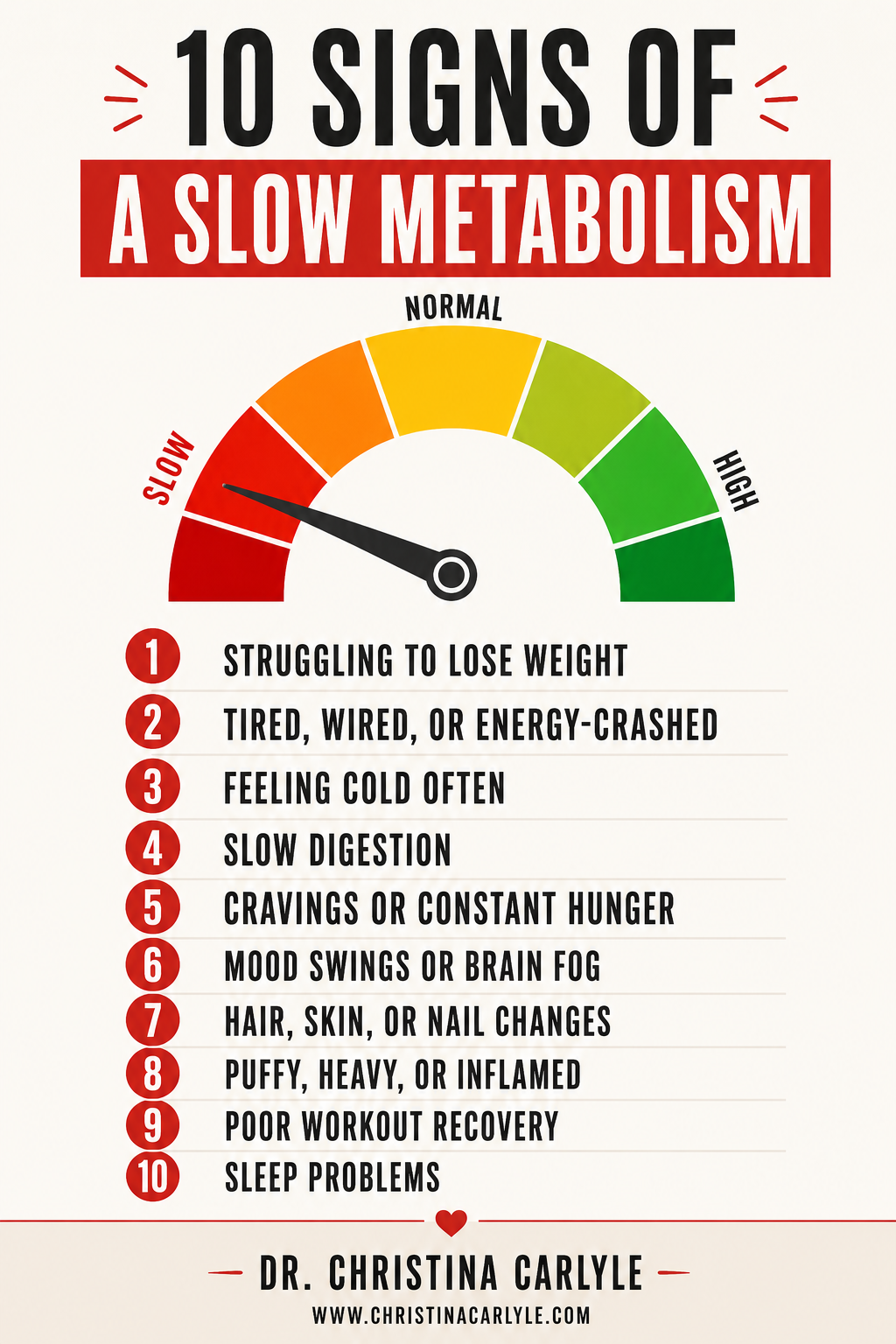
1. You Struggle to Lose Weight Even When You’re Trying
This is the sign most people notice first. You’re eating better, exercising, cutting back, doing “all the things,” and the scale barely moves. Or you lose a few pounds and then your body slams the brakes. Some people think it’s ‘age’ or ‘genetic’ – it’s not!
This happens because fat loss is not your body’s top priority. If your metabolism is slow because of nutrient deficiency, toxicity, stress, inflammation, under-eating, or hormonal disruption, your body may hold on to fat because it sees fat as protection.
2. You Feel Tired, Wired, or Wake up Feeling Tired
A slow metabolism can make energy feel inconsistent. You may wake up tired, drag through the day, crash in the afternoon, or feel exhausted until bedtime when your brain suddenly becomes very interested in solving every problem you’ve ever had. Adorable timing, obviously.
That tired-all-day-but-wide-awake-at-night pattern can happen when your nervous system and stress hormones are out of rhythm. Research on the interaction between sleep, stress, and metabolism shows that chronic stress and sleep disruption can contribute to metabolic dysfunction through changes in the HPA axis and neuroendocrine response.
3. You Feel Cold Often
If you’re always cold, especially in your hands and feet, it can be a sign your body is conserving energy. Body temperature is tied to metabolic function, thyroid health, circulation, and cellular energy production.
When the body is under-fueled, stressed, or metabolically sluggish, it may lower heat production because heat costs energy. Translation: your body is trying to save fuel. Thyroid hormones help regulate basal metabolic rate and thermogenesis, and research on thyroid hormone regulation of metabolism shows how thyroid function affects body weight, energy expenditure, and heat production.
4. Your Digestion Is Slow
A slow metabolism often shows up as slow digestion. You may feel heavy after eating, bloated, constipated, gassy, or like food just sits in your stomach.
Digestion requires energy, enzymes, stomach acid, bile flow, nervous system regulation, and proper muscle movement through the digestive tract. When the body is stressed or under-resourced, digestion often gets deprioritized which affects nutrient absorption, causes toxicity, and stress – all of which slow metabolism further. A review on the stress-digestion connection explains how chronic stress can disturb digestive function, which is one reason stress can make the whole body feel sluggish and backed up.
5. You’re Constantly Craving or Hungry
Cravings aren’t always a willpower problem. They can be a metabolism problem.
If your cells are not getting usable energy or enough nutrients, your body may push you toward quick fuel like sugar, refined carbs, caffeine, or snacky foods. Constant hunger can also happen when meals are not matched to your metabolic type, when blood sugar is unstable, or when you’re not eating enough of the nutrients your body actually needs. Research on stress, cortisol, and appetite-related hormones suggests that stress biology can influence hunger, cravings, and reward-driven eating behaviors.
6. You have Mood Swings
Your brain needs a lot of energy and nutrients to function well, so metabolic stress can show up emotionally and mentally too.
If you feel irritable, anxious, low, foggy, unmotivated, overwhelmed, or emotionally reactive, it may be connected to blood sugar swings, nutrient deficiencies, poor sleep, inflammation, stress hormones, or not eating in a way your body can metabolize well. Research on sleep loss and metabolic consequences links poor sleep with changes in carbohydrate metabolism and endocrine function, which can affect energy, cravings, and mood stability.
7. Your Hair, Skin, or Nails Are Changing
Hair thinning, brittle nails, dry skin, dull skin, premature graying, or a sudden loss of skin elasticity can all be clues that your body is not repairing and rebuilding efficiently.
When the body is under metabolic stress, it prioritizes survival over beauty. Hair growth, glowing skin, strong nails, collagen support, and tissue repair are not emergency functions. Rude, but true. Research on thyroid hormone effects on human hair follicles shows that thyroid hormones can directly influence hair follicle biology, while research on thyroid hormone action on skin shows that thyroid signaling is involved in skin structure and function.
8. You Feel Puffy, Heavy, or Inflamed
Feeling puffy is not always “just bloating.” Puffiness can come from inflammation, water retention, poor detoxification, stress hormones, food sensitivities, sluggish digestion, histamine, and lymphatic congestion.
When the body is overwhelmed, it can hold onto water, slow elimination, store toxins in fat, and create that heavy, swollen, uncomfortable feeling. Again, this is your body trying to protect you, not punish you. Hypothyroidism is one example of slowed metabolic function, and a PubMed review on hypothyroidism and women’s health notes symptoms such as mild weight gain, edema, cold intolerance, constipation, mental impairment, and dry skin.
9. You Don’t Recover Well From Workouts
If workouts leave you exhausted, sore for days, hungrier than normal, inflamed, or gaining weight instead of feeling stronger, your metabolism may not have the resources it needs to recover.
Exercise is a stressor. A healthy body adapts to it. A depleted, toxic, under-fueled, or stressed body may struggle to recover from it, which can make fat loss harder and fatigue worse. Research on overtraining syndrome describes how an imbalance between training and recovery can lead to fatigue, reduced performance, mood changes, sleep disruption, and hormonal changes.
10. Your Sleep Is Off
Poor sleep can be both a cause and a sign of metabolic dysfunction. You may have trouble falling asleep, wake up between 2 and 4 a.m., sleep lightly, or wake up feeling unrefreshed.
When blood sugar, cortisol, digestion, detoxification, and nervous system regulation are off, sleep often suffers. And when sleep suffers, metabolism takes another hit. A charming little cycle, obviously. Research on sleep deprivation, weight loss, and metabolism shows that sleep restriction can increase hunger and appetite while altering metabolic and endocrine function.
Why a Slow Metabolism Happens
In my experience, a slow metabolism usually comes from three big places: nutrient deficiency, toxicity, and stress.
These three overlap constantly. Stress burns through nutrients and makes them harder to absorb. Toxicity increases the need for nutrients because your body needs nutrients to detox and repair. Nutrient deficiency makes stress harder to handle and detoxification less efficient.
So when someone asks me how to fix a slow metabolism, I’m not thinking, “Let’s throw green tea at it and hope for the best.” I’m thinking:
- What is the body missing?
- What is the body overloaded by?
- What is keeping the nervous system stuck in survival mode?
How to Fix a Slow Metabolism
The best way to fix a slow metabolism is not to punish it. It’s to remove what’s blocking results, give the body what it needs, and then build a plan that helps your metabolism work better without depleting it even more.
In my experience, a slow metabolism usually comes from three big places: toxicity, nutrient deficiency, and stress. These three overlap constantly. Toxins increase the body’s need for nutrients. Stress burns through nutrients and makes them harder to absorb. Nutrient deficiency makes it harder to detox, repair, regulate hormones, and produce energy.
So when someone asks me how to boost metabolism, I’m not thinking, “Let’s throw green tea at it and hope for the best.” I’m thinking: what is the body missing, what is the body overloaded by, and what is keeping the nervous system stuck in survival mode?
Step 1: Reset Your Body to Repair Metabolic Damage
If you have several signs of a slow metabolism, the first place I recommend starting is my Reset Cleanse.
Your metabolism is slow for a reason. And if that reason involves toxicity, nutrient deficiency, inflammation, sluggish digestion, cravings, or feeling puffy and stuck, you need to clear the blocks before asking your body to burn fat efficiently.
The Reset Cleanse is a 7-day metabolism and full body detox that helps rid the body of things that make it harder to burn fat, get healthy, and feel good. It radically reduces exposure to toxins while flooding the body with essential nutrients for seven days.
This is why it’s such a powerful first step. It helps your body stop fighting so hard just to function. Many women lose up to 10 pounds in seven days, but the bigger win is how quickly symptoms can improve. Women often feel lighter, clearer, less bloated, less snacky, more energized, and more in control in just one week.
Once your body is reset, it’s prepped and primed for fat burning. That’s when the next step works even better.
Step 2: Eat for Your Metabolic Type
After the detox, you don’t want to go right back to the same foods and habits that slowed your metabolism in the first place. The Reset Cleanse is temporary. The next step is learning how to fuel your body based on your unique metabolic needs.
This is where the Metabolic Type Meal Plan comes in.
Food gets results faster than exercise because food changes your chemistry all day long. Food is not just calories. Food can create inflammation or reduce it. It can spike cravings or calm them. It can stabilize blood sugar or send you on an energy roller coaster. It can support detoxification, hormones, digestion, and fat burning, or it can create adverse chemical reactions that make your symptoms worse.
The wrong foods in the wrong person can cause internal stress, even if those foods are technically healthy. If your body can’t digest, metabolize, or tolerate something well, you may experience fatigue, bloating, cravings, mood swings, inflammation, weight gain, and low motivation.
That’s why the goal is not to eat less forever. The goal is to eat the foods your body can actually metabolize, absorb, digest, and use, while avoiding the foods that slow your metabolism or trigger symptoms.
When you eat for your metabolic type, you give your body the right fuel after the reset. That’s how you keep building momentum instead of detoxing for seven days and then wandering back into the nutritional wilderness. Been there, bought the snacks.
Step 3: Exercise in a Way That Supports Your Metabolism
Exercise absolutely matters for metabolism, but the answer is not always “work out harder.” If your metabolism is already slow because your body is stressed, depleted, inflamed, or under-fueled, random intense workouts can sometimes make you feel worse instead of better.
Strength training can help build and maintain lean muscle, which supports metabolic health. Cardio can support heart health, endurance, insulin sensitivity, and calorie burn. Walking can help regulate blood sugar, reduce stress, support digestion, and improve consistency. Mobility, stretching, and nervous-system-supportive movement can help the body shift out of survival mode so repair and fat loss are easier.
The key is choosing the right kind of exercise for your body, your goal, and your current metabolic state. A woman who is exhausted, wired at night, under-eating, and inflamed does not need the same plan as a woman who is well-fueled, sleeping great, and ready to build muscle.
This is where structure matters. Random workouts usually create random results. A good program should help you get stronger, improve energy, support fat burning, and avoid depleting your metabolism even more.
If you’re not sure what type of workout plan fits your body and your goals best, take my Program Style Quiz. It will help you figure out the best next step so you’re not guessing, overdoing it, or forcing your body through a plan that doesn’t fit.
Final Thoughts on Signs of a Slow Metabolism
If you recognize several signs of a slow metabolism in yourself, don’t panic and don’t immediately blame your body. Your body is not broken. It’s communicating.
Struggling to lose weight, waking up tired, crashing during the day, feeling wired at night, mood swings, puffiness, cravings, and premature aging can all be clues that your metabolism needs support at a deeper level.
Start by asking what your body needs less of and what it needs more of. Less toxic load. Less internal stress. Less food that creates adverse reactions. More nutrients. More metabolic-type-friendly meals. More nervous system safety. More consistency that doesn’t feel like punishment.
If you want the quickest place to start, I recommend the Reset Cleanse first because it helps clear the blocks and flood your body with nutrients for seven days. Once your body is reset, it’s prepped and primed for fat burning, and the next step is learning how to fuel it based on your unique metabolic needs with the Metabolic Type Quiz or Metabolic Type Meal Plan.
I hope this post helped you understand what signs of a slow metabolism really mean and why your body may be holding on instead of letting go.
If you liked this post or have questions, let me know in the comments.
Forever rooting for you,
Dr. Christina Carlyle

Metabolic Type Meal Plan Results
Eating Healthy But Not Seeing Results?
The solution is eating for your unique metabolic type - When you eat foods that match your Metabolic Type you can lose weight and feel great 3 times faster. Take the Metabolic Type Quiz to discover your type and the meal plan that's best for you.
TAKE THE QUIZIf you liked this article, you’ll also like these posts
- What Is Metabolic Dysfunction?
- How to Speed Up Metabolism Naturally
- Symptoms of Toxins: Top 10 Signs You Need to Detox
- Toxins: How They Affect You and How to Avoid Them
- Always Tired? No Energy? Waking Up Tired?

Dr. Christina Carlyle is a Doctor of Functional Medicine, FDN-P, Nutritionist, & Trainer who transformed her body and health – getting off 7 medications and losing 40 pounds for good. Now, she helps other women get happy, healthy, and fit – quickly & naturally – without any BS